

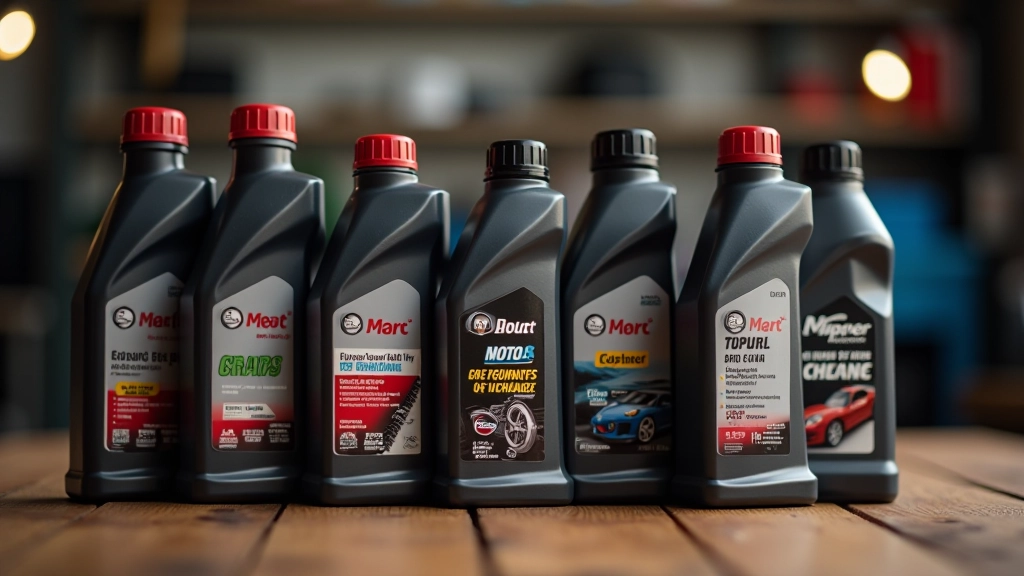
Choosing the Right Oil for Your Car
Confused about synthetic versus conventional? We break down oil types and what your vehicle actually needs. Don't overpay for something you don't need.
Why Oil Matters More Than You Think
Your engine's oil does a lot more than just lubricate moving parts. It's the lifeblood of your car. Good oil keeps everything running smoothly, protects against wear, and helps your engine last longer. But here's the thing — not all oils are created equal.
Walk into any auto parts store and you'll see rows of bottles with different colors, different prices, and labels that might as well be in another language. SAE 10W-30, synthetic blend, full synthetic, conventional. It's enough to make your head spin. The good news? It's not as complicated as it looks. We're going to break it down for you.
Quick Facts About Motor Oil
- Oil viscosity (thickness) changes with temperature
- Your owner's manual has the exact specification you need
- Synthetic oils last 2-3 times longer than conventional
- The wrong oil can void your warranty

The Three Main Oil Types
There are basically three categories of motor oil, and understanding the differences is key to making the right choice. Each one has its own advantages, disadvantages, and price point.
Conventional Oil
This is the traditional stuff — refined crude oil with additives. It's the cheapest option and works well for older vehicles or those with simpler engines. You'll typically need to change it every 3,000 to 5,000 miles though. If you've got an older car that doesn't have demanding performance requirements, conventional oil does the job fine.
Synthetic Blend
It's the middle ground. Synthetic blend mixes conventional oil with synthetic compounds to give you better performance than straight conventional, but at a lower cost than full synthetic. You're looking at change intervals of 5,000 to 7,500 miles. This is a solid choice if your vehicle is newer but you don't want to pay premium prices.
Full Synthetic
Completely engineered in a lab. It lasts the longest — you might go 7,500 to 10,000 miles (or even longer) between changes depending on your car. Full synthetic performs better in extreme temperatures, protects better under stress, and keeps your engine cleaner. It's expensive, but for many modern cars it's what you really need. Check your manual to see if it's required or just recommended.


Understanding Viscosity Ratings
That number you see on the bottle — like 10W-30 or 5W-40 — that's the viscosity rating. It matters, but it's not as scary as it sounds. The first number (10W, 5W) tells you how thick the oil is in cold weather. The "W" stands for winter. A lower number means it flows better when it's cold, which is important for starting your engine in winter.
The second number is the viscosity when your engine is running at normal operating temperature. A higher number means thicker oil. So 10W-30 is thin when cold but thickens up to 30-weight when warm. That's the trade-off — you want it thin enough to flow in winter but thick enough to protect in summer heat.
Pro tip: Stop guessing. Your owner's manual has the exact specification. That's not a suggestion — that's what your engine was designed for. Using the wrong viscosity can actually reduce fuel economy and cause premature wear.
Keep Learning About Vehicle Maintenance


How to Choose the Right Oil for Your Vehicle
Alright, so you understand the basics. But how do you actually decide? It comes down to a few simple factors.
1
Check Your Manual First
Seriously, this is where you start. Open that owner's manual (or look it up online) and find the oil specifications. It'll tell you the viscosity and whether synthetic is required, recommended, or optional. This single step eliminates 90% of the confusion.
2
Consider Your Vehicle's Age and Mileage
Newer cars with lower mileage can usually handle conventional oil if that's what the manual says. But if you've got higher mileage or drive aggressively, synthetic or synthetic blend will protect better. Older vehicles with worn engines often benefit from heavier oils or blends.
3
Think About Your Driving Habits
Do you mostly drive short distances in town? That's harder on oil because the engine doesn't reach optimal temperature. Synthetic oil handles this better. Highway driving at steady speeds? You've got more flexibility. Towing or hauling? Definitely go with synthetic or a high-quality blend.
4
Factor in Your Climate
If you live somewhere cold, synthetic performs better at startup because it flows easier. Hot climates benefit from thicker oils that don't break down as quickly. Your manual already accounts for this, but it's worth knowing why those recommendations exist.

Important Note
This article is for educational purposes and provides general information about motor oils. Always consult your vehicle's owner's manual for specific recommendations regarding oil type, viscosity, and change intervals. If you're unsure about which oil to use or have concerns about your vehicle's engine, consult with a qualified mechanic or automotive specialist. Regular oil changes are essential for engine health and longevity.
The Bottom Line
Choosing the right oil isn't rocket science. Your owner's manual has the answer. Don't overthink it, and don't fall for marketing hype about "premium" oils you don't need. Stick to what your vehicle was designed for, change it on schedule, and your engine will thank you with years of reliable service.
The cost difference between oil types matters, sure. But skimping on maintenance costs way more in the long run. A $50 synthetic oil change every 10,000 miles beats a $5,000 engine rebuild any day. You've got this.